aulogo3

Remember That Time I Met C.W. McCall?

PROLOGUE

In order to eat this layered cake, first I need to peel a pretty big onion. I worked at The Durango Herald from 2004 to 2015, and I was the sports editor in 2012 when our publisher, Richard Ballantine, came rushing into his newsroom on a Friday afternoon to fanatically exclaim, “C.W. McCALL IS HERE!” C.W. McCall is an absolute legend in my family. Once upon a time, he was the mayor of Ouray, a geographical neighbor to Durango, so it certainly wasn’t a reach to think he still lived there and could possibly be visiting my fair city and in turn this fair newspaper. With his clipped CliffsNotes explanation, Richard helped put the pieces together for me in real time, and once the dots were connected in reality, I picked my jaw up off the floor, and we both bounced through the halls heralding the country singer’s coming. 

I wrote this story to be published in The Ultimate, a family newspaper started by my Uncle Steve and continued to this day by myself and annually distributed at our family vacation in Gulf Shores, Alabama. (Every summer for the last 30 years, give or take a few seasons off, my dad’s side of the family meets for a weeklong vacation in Gulf Shores.) The Ultimate stands for Unterreiner Lies, Trivial Information, Mementos, and Trashy Editorials; this account certainly fits the bill. 

The Boswells – a whole ’nother story in itself – is a fictitious surname adopted by the original Gulf Shores family: Steve (Bart); Debbie (Beulah); and their three sons, David (Biff), Mark (Barney Big Belly), and John (Baby); and their family babysitter, my sister Kari (Betty).

The rest of the players: Ryan, my brother; myself; Richard Ballantine, publisher of The Herald; and the man, the myth, the legend himself: Bill Dale Fries, aka C.W. McCall. 

REMEMBER THAT TIME I MET C.W. McCALL?

By Aaron Unterreiner 

To borrow a tease from Kari and Ryan that always got my goat as a youth, “Hey, do you remember that time?”

Of course, my older siblings had no particular time in mind, but with me none the wiser, they’d always pretend otherwise. They were the cool, really, really good-looking blonde and blond kids that always knew the inside joke, while I was the Alfred E. Newman-looking, red-headed stepchild that came from the mailman and always was on the wrong side of the jape. (No offense, Mom; kids can be cruel, especially siblings.)

This time, however, there is a time in mind. You could say it started in 1928. For Uncle Steve, it started in 1975. For the Boswells, it started in 1987. For me, it started in 1996: That was the time I first heard C.W. McCall sing … er, talk, er sing/talk.

C.W. McCall was born in 1928 – “born in Iowa, a flatlander; I always dreamed of the mountains, especially the Rockies,” he told me in 2012. 

Uncle Steve first heard him in 1975, then introduced the legend to a legendary family – the Boswells. “They came out with some newfangled technology called cassette tapes, and I made a tape of C.W.’s greatest hits for our first-ever trip to Gulf Shores in 1987,” Steve said. “Kari, aka Betty Boswell, was about 15 years old at the time and fell in love with C.W. As I recall, she loved the line in the ‘Old Home Filler-Up an’ Keep On-a-Truckin’ Cafe’ song that said Mavis was built like a burlap bag full of bobcats. Kari would just laugh and giggle when she heard that line.”

Tried and true for the Boswells, the cassette tape turned into a compact disc and was passed on to Ryan and I in ’96 – by Uncle Steve en route to Gulf Shores at a gas station somewhere in the south that probably played “Convoy” on its own greatest hits compilation about 100 times a day. 

“I remember looking in the rear-view mirror seeing all of you laughing at the music,” said Steve, who was leading our very own convoy to the beach that year. “I didn’t know whether you got a kick out of C.W. and his crazy songs or you were laughing at me for listening to that type of music. I just figured it was a little bit of both.”

OUR BIRTHRIGHT

Now, being born Unterreiner means the likes of Johnny Cash, Kris Kristofferson, and Tom T. Hall are more than just singers … er, talkers, er, singers/talkers. They’re the mixed tape first thing in the morning before a Saturday 10K; they’re the cool-down music on the way home; they’re the stewards over our dinner table; they’re the announcers over a familial game of 9-ball; they’re the whispers in the night, lulling us to sleep with their bedtime stories. We know this voice. 

And then, there’s C.W. McCall. Honestly, when I first heard it, I didn’t know if it was serious or not; I didn’t know if I should laugh, cry, or cry from laughter. Turns out, it was a little bit of both.

I mean, how could you not cry after hearing “Roses for Mama,” a song so sweet it was remade three times – once into a movie, once in American song, once in German? Or how about “Aurora Borealis” – I mean, Joe had never even seen the Milky Way!? The poor guy thought those stars way out in the sticks were smog!

The funny is obvious, just one turn through a C.W. chorus with his lovely backup singers dropping that hook and, well, you’re hooked – hooked like the Billboard Hot 100, which featured four of C.W. McCall’s songs; hooked like Johnny Carson, who hosted C.W. McCall for an interview on his TV show on May 20, 1975; hooked like Uncle Steve; hooked like the Boswells.

At some point, I stopped laughing at the music and started singing with the music. Perhaps it was when McCall’s “mountains” became my mountains, too. I made the trek cross-country to Durango in 2004, and I saw C.W.’s truckers on their CB radios. I climbed “Wolf Creek Pass” – “way up on the Great Divide” – and fortunately I did not lose control on the descent and “slam into a feed store in downtown Pagosa Springs.” I now knew “Black Bear Road” and learned for myself why “you don’t have to be crazy to drive this road, but it helps,” and why unless we had drove the Black Bear Road before, we’d be, well, “we’d be better off to stay in bed an’ sleep late (now pay no ’tention to the guitar there).”

THE D&SNGRR

And when you live in Durango, you most certainly know of the Durango & Silverton Narrow Gauge Railroad – “here comes the Silverton up from Durango; here comes the Silverton a-shovelin’ coal; here comes the Silverton up from the canyon; see the smoke and hear the whistle blow!”

C.W. McCall lives in Ouray, like Durango, one of Southwest Colorado’s four mining towns, which he considers all “home.” For me, there’s nothing better than catching Cardinals baseball on opening day at Busch Stadium in St. Louis; for C.W., there’s nothing better than catching opening day of the D&SNGRR at the Durango trainyard. He never misses one. 

But as of Friday, May 4, 2012, on opening day of the D&SNG, I didn’t know that. So, after eight years on the job at The Durango Herald, imagine my surprise when I walk into work for a typically well-built and heavily constructed Friday on the sports desk. Upon my arrival, I find my 66-year-old publisher running around the newsroom as giddy as a child on Christmas Eve, preparing for the any-minute-now arrival of the man, the legend, C.W. McCall. 

I mean, the boss literally bounced through the front doors, around the reception desk, waving his arms above his head with a smile the size of Smelter Mountain. “C.W. McCALL IS HERE! C.W. McCALL IS HERE!”

At this point, I lost all professional discretion and threw my hat in the ring with the big guy. As far as I was concerned, it was Christmas Eve! I was that kid, dreaming of Santa’s sleigh flying over Germantown, Illinois, and Cape Girardeau, Missouri, landing on my grandmothers’ rooftops, delivering scooters with white T-bar grips and matching tires. 

… oh my … 

“C.W. McCALL IS HERE! C.W. McCALL IS HERE!”

Our photo editor tried to render “Convoy” on his iPhone, but it wasn’t loud enough. Our publisher wanted more; I wanted more. Rightfully so, he wanted it heralded off his Herald walls at a fever pitch, through the rafters, and out onto Main Street. Another colleague complied and blasted that ol’-timey music through his computer – C.W. McCall, loud and proud. And I started singing, like only a kid with a spatula for a microphone on Christmas Eve can. 

Word for word. 

Line for line. 

Song for song.

The big man was impressed, so much so that his Smelter-sized smile even grew! (I’m hoping for a big raise at the turn of the next business year.) And my colleagues, well, I didn’t know whether they got a kick out of C.W. and his crazy songs or they were laughing at me for listening to that type of music. I just figured it was a little bit of both. 

After I led the office through “Convoy” and “Wolf Creek Pass” – which checked in at Nos. 1 (1976) and 40 (1975) on the Billboard Hot 100, respectively – the man himself actually walked through our front doors.

“C.W. McCALL IS HERE! C.W. McCALL IS HERE!”

THE STORYTELLER

Now, Durango might be a small town, but it is beautiful, and beauty never falls short of suitors. This town has attracted its fair share of athletes. I’ve interviewed professional basketball players, Olympic and World Cup athletes, professional hockey players, and professional football players. I’ve interviewed Lance Armstrong, before his fall from grace. I’m not a class warrior. I’m not awestruck by fame or success. Some people make more money than others; some make less. 

But when C.W. McCall walked into The Durango Herald that day, I knew … I was nervous! I hadn’t felt that in a long, long time. Then, I knew why. One of my favorite folksingers, Utah Phillips, another sing-song, talk-song kinda specialist, always asked of us: Whatever happened to kids actually believing in real-life heroes, not the Batmans, Ironmans, and Supermans, but real-life, flesh-and-blood heroes? I didn’t realize it until after I met C.W. McCall, but that’s why I was so nervous, that’s why I was so excited. I wasn’t so much nervous about meeting the man, I was nervous about meeting my heroes’ hero. This man meant something to me, my family, my dad, my uncles; if we’re talking currency, the only thing with real tangible value in my world is family. 

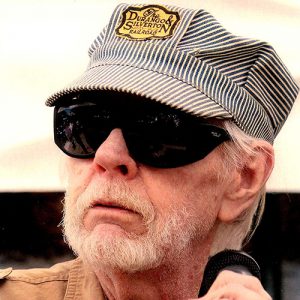
An 84-year-old Bill Dale Fries – “pronounced fries, like the potato, not freeze,” he told us – walked into our newspaper wrapped in bewilderment, visibly crossing a threshold from comfortable (MC’ing opening day) to uncomfortable (MC’ing … what exactly?). Once upon a time, Bill Fries worked in newspapers as a political cartoonist, but that was a lifetime ago; Bill Fries wandered into our newspaper wondering what in the hell he was doing here. Of course, I was the first – well, second: After you, Mr. Publisher – to shake the man’s hand. Our born-again newspaper boss ushered Mr. McCall into a conference room, and we all followed suit like sheep to a flatlander farmer. 

Apparently, nobody knew what came next. Our publisher was too damn giddy to say anything in the way of an introduction, so … Bill Dale Fries just started talking, telling his story. After working for his local newspaper as a teenager, Fries majored in music and fine arts at the University of Iowa. Upon graduating, he worked at an Omaha, Nebraska, television station, then as a sign painter. 

“All that experience led me to get into advertising,” he said. 

Fries quickly became art director of Bozell & Jacobs, an advertising agency in Omaha, when the Metz Baking Company asked him to design a television campaign for Old Home Bread, at which point I chimed in to answer the cacophony of bells ringing in my head. C.W. McCall was seated at the head of our daily news meeting table, a king at the head of our great hall; I was seated at his right. My king, dumbstruck that this mere child sitting next to him actually knew of which he spoke, fumbled for his words. 

“Yeah, yeah, the ‘Old Home Filler-Up and Keep On-a-Truckin’ Cafe,’” I said. The look he gave me I will cherish forever. He was shocked – SHOCKED! – that this 20-something-year-old knew his music and knew it well! He went from uncomfortable to comfortable quicker than you could say “a burlap bag full of bobcats,” and whenever he stumbled upon his own history lesson next, he only needed to look right to find his answers. Me, C.W. McCall’s muse!

The long and short of his legend: He produced an ad that centered on the interaction between a wizened truck driver named C.W. McCall and the waitress named Mavis, but as Bill Fries tells it, the actor they found to play C.W. McCall “was a falsetto, and while he was plenty good-lookin’ enough, well, that hardly worked with my character!” So, the man, Bill Fries, was reborn as C.W. McCall, the legend, as the ad agency eventually suggested. They used the “plenty good-lookin’ enough” guy as the character in the commercial, but C.W. did the voiceover sure enough, and the legend was born. 

“These commercials became a huge sensation in Iowa, Missouri – the whole region,” he said. “When we went to New York City for the Clio Awards, I’ll be damned if we didn’t win the top advertising campaign. We were competing with all these Madison Avenue types – the ‘Mad Men’ of that era. But we beat out Chrysler and Ford.” 

The commercial also proved to be the springboard for Fries’ unlikely second career as a best-selling country musician, who toured the country singing his hits, such as the 1976 No. 1 chart-topper “Convoy,” which sold more than two million copies. Suddenly, he was getting calls from Capitol Records and MGM Records about doing an album. 

“We need 10 more songs like these,” they told him. 

“I … I … I’m still just an ad man,” he recalled thinking. 

So he wrote another hit song, “Wolf Creek Pass.”

“We need 10 more songs like these,” they told him. 

“I … I … I’m still just an ad man,” he said again. 

So he wrote the “Old Home Filler-Up and Keep On-a-Truckin’ Cafe” and “There Won’t Be No Country Music (There Won’t Be No Rock ’n’ Roll)” – both reaching the Billboard Hot 100. He wrote “Round the World with the Rubber Duck” (“sequels are tough,” he turned and told me specifically when I boasted of knowing all about the lesser known “Convoy” reprisal). He wrote “The Silverton” and “Four Wheel Drive” and “Classified” and “Crispy Critters.”

“I wrote a lot of those songs about this area – Durango, Ouray, Silverton – and they caught on around the country,” the eventual mayor of Ouray said. “I don’t know why; people just identify with real, homespun stories, I guess.

“You have to be at the right place at the right time and the right place with the right stuff – that’s all a matter of chance,” he said. “But people tell me, ‘You’re so lucky,’ and I don’t go along with that. I think you make your own luck.”

JUST LIKE ELMO AND McCALL

Fortunately, C.W., we Unterreiners were all in the right place at the right time with the right stuff. Luck? I guess not. We know a good song when we hear it, especially our Uncle Steve, aka Bart Boswell, who needed to hear a good song every now and again as a reprieve from Big Bird’s “Easy Going.”

“David John loved it,” Kari said of the Boswells’ oldest child’s affection for the Sesame Street singalong. “The two of us would sing together from the back seat, over and over and over. Mark was too little to sing along, but he would bebop in his car seat feeling carefree and happy. We’d look up and see Debbie in smiles in the front, happy with life knowing that her kids were being soothed by the love of Big Bird in song. All was good. 

“And then, you’d take a peek at Uncle Steve. He was dying up there, counting down the minutes until Elmo would take his friends and just GO AWAY! The music was not bringing him that easy-going feeling,” said Betty, the Boswells’ teenage babysitter during the early years of our family’s annual Gulf Shores vacations. “He was sick of the sing-song. He’d beg Debbie to put something else in.”

Hey, remember that time? 

“A little C.W. … PLEASE!? Anything but this,” Betty remembered Bart saying. Eventually, Bart’s battle cry rubbed off on Beulah, Biff, Barney Big Belly, Baby, and Buford the Beatle Bug. 

“When David and Mark were littler they would cry over this change in tune; however, as the years went on and this theme continues, even David and Mark and then John were happy to hear C.W. coming from the speakers,” Betty said. 

Cries of tears turned to cries of joy for “REWIND THE TAPE!” – “so we could hear it over and over again. We would sing along and laugh and laugh as we drove our way to the beach,” Kari said. “Sometimes Steve would pretend to have a CB player, and he would call another truck driver.”

“Yeah, breaker 1-9, this here’s the Rubber Duck. You got a copy on me, Pig Pen? C’mon. Ah, yeah, 10-4, Pig Pen, for sure, for sure. By golly, it’s clean clear to Flag Town, c’mon. Yeah, that’s a big 10-4 there, Pig-Pen. Yeah, we definitely got the front door, good buddy. Mercy sakes alive, looks like we got us a convoy.”

The Revolution


PROLOGUE

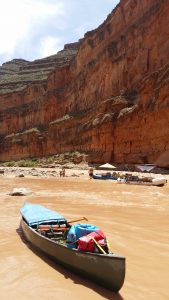
This story needs no grand introduction; it’s just a poem about a guy, his girl, and his canoe. I answered a classified ad about a canoe for sale in 2014. The ad brought me to an elderly couple’s home in Wildcat Canyon outside of Durango. Naturally, I asked the gentleman about his canoe and their history together; that history is more or less condensed below. 

This story, this poem, is about my maiden voyage in my new canoe – a five-day trip through the Goosenecks on the San Juan River with Amanda in my bow. My boat was named after Amanda and I pointed her down the tongue of a healthy-CFS-Class III Government Rapid in June of that same summer. The water was big that day, and we took a huge lateral wave at the top of the rapid that seriously compromised our position by rapid’s end; but I’ll be damned if we didn’t stay upright and safely paddle our boat to shore – underwater. Honestly, rigged to flip, we were two heads bobbing in the water, paddling underwater. But we made it. We fought the Government and won. 

VIVA LA REVOLUCION

By Aaron Unterreiner

There once was a man who loved his boat.

He bought it brand-new in the ’70s, and together they learned to float.

They boated the Dolores and the San Juan.

They played on my favorite rivers before I ever turned one.

It once was buried alive on the Ruby Horse. 

And true to its name, the river produced a thief to waylay its course.

When Old Man Rescue returned to see a horse about a canoe,

What he found turned himself an entirely new shade of blue.

You see, another crew sprung that canoe from the lou. 

But a little birdie told Old Man Rescue who.

It was a guide from Grand Junction. 

So Old Man Recovery called to check his function.

But when the guide ducked his calls, 

Old Man Recovery showed some balls.

He drove from here to there with a 30-rack and a mission:

He hopped a fence, dropped the beer, fought off a dog
and commandeered his expedition.

Several years later, this Old Towner became too heavy for the old-timer.

So he placed an ad in the paper,
And I swung by, took one good look and said, “I’ll take her.”

Shortly thereafter, we made our maiden voyage on the Goosenecks. 

With Amanda beautiful in the bow,
We rowed three days to Government Rapid and said, “OH WOW.”

The Government gave us its best shot – a quick left, counter with the right,
Attacking us head-on with a waveful of might.

We took on water, and it tried to sink us. 

But calm, cool, collected and without fuss … 

We had our fun.

We fought the Government and won.

Viva La Revolucíon.

The Case for the Ace to Close His Career as the Cardinals’ Closer

PROLOGUE

If you’re a baseball fan, particularly a Cardinals or Braves fan, you might relate to this story. I, myself, was born and raised in St. Louis and bleed Cardinals red; it’s a birthright. Adam Wainwright, the protagonist of this particular piece, will go down as one of the greatest Cardinals in St. Louis history; in my humble opinion, he could be even more. 

I wrote this story during Spring Training 2018 and released it the day of his first start this spring. Since then, Wainwright started the season on the disabled list with a hamstring strain. He was activated in April, then placed on the disabled list again later that month with elbow inflammation. He was activated in May, made one start, then was placed on the disabled list again two days later. He returned from the disabled list yet again as a starter in early September.  

THE CASE FOR THE ACE TO CLOSE HIS CAREER AS THE CARDINALS’ CLOSER

By Aaron Unterreiner

Harken back to 2006. Harken back, particularly, to the Cardinals’ improbable 2006 postseason. Can you see it, in your mind’s eye? It’s not difficult picturing Carlos Beltran’s knees buckling at that perfect 12-to-6 curveball to win the National League pennant. It’s not difficult picturing Brandon Inge on the receiving end of the Good Morning, Good Afternoon, and Good Night of a young closer’s all-slider salutation to win the World Series just eight days later. 

For good measure, the Cardinals’ rookie was the last pitcher standing against the San Diego Padres in the National League Division Series, as well. He earned four saves that postseason, three that regular season, and those seven saves are the only saves of Adam Wainwright’s brilliant 12-year career in St. Louis. If it weren’t for Wainwright repairing the Cardinals’ rickety cart from the back of the bullpen in ’06, an otherwise uninspiring ballclub that limped into the playoffs on the final day of that regular season most likely would not have miraculously won the franchise’s 10th world championship. 

It’s not nostalgia, however, that makes me clamor for Wainwright to reprise his role as the Cardinals closer; it’s perspicacity. 

Consider the case of Hall of Fame pitcher John Smoltz: 

Smoltz spent the first 12 years of his career as a starting pitcher. He was a four-time all-star and a Cy Young Award winner; he had a 157-113 record as a starter his first dozen years in the league, including a 43-23 record and a 3.04 earned-run average over 90 starts and an average of 203.1 innings pitched in his age-30-33 seasons. Despite the strong numbers, Smoltz’s injuries mounted; multiple trips to the disabled list in 1998 and ’99 – his age-31-32 seasons – and a disabled season in 2000 due to Tommy John surgery led the Atlanta Braves organization to rethink its strategy regarding its workhorse. 

Smoltz had pitched more than 200 innings in seven of his 12 seasons. At age 34, he was coming off a lost season due to a significant injury to his throwing arm. With fellow Hall of Famers Greg Maddux and Tom Glavine still anchoring the rotation, the Braves thought to relieve some of Smoltz’s stress by trying his hand as a reliever. 

“I’m open to anything at this point,” Smoltz said then in an interview with The New York Times. “The last three years of my career haven’t gone the way I thought they would go. I’ll let the offseason take care of itself. They know my desire to win. Just a chance to pitch in the postseason again after what I went through last year was my goal.” 

As it turned out, the workhorse was a warhorse, and it wasn’t Smoltz’s time to be turned out to pasture. From 2001 to 2004, Smoltz became arguably the most dominant closer in the game, picking up 154 saves with a 2.62 era during his age-34-37 seasons, including – ahem! – 45 saves and a 1.12 era his age-36 season. 

Wainwright is entering his age-36 season. 

“One thing that is a pleasure is to see a closer with good control,” said Leo Mazzone, Atlanta’s longtime pitching coach. “Smoltz is coming in, throwing bullets, throwing a nasty slider, a nasty split, but he has good control. He hasn’t changed a thing, except that his fastball has picked up a couple of miles per hour because he’s only pitching one or two innings. He’s a great postseason pitcher. John could always elevate his game. In the ninth inning, it’s time to elevate your game; that kind of fits right into his mentality.” 

Sound familiar? Remind you of anybody else’s mentality? 

Without question, Wainwright’s quality of pitches has taken an extreme hit, but the veteran’s control and temperament have not wavered. If a couple of mph could be restored to his four-seam fastball, if he could drop his least effective pitches (changeup, cutter) from his arsenal and is left to focus on his curveball and sinker as his go-to offspeed pitches, is it so hard to imagine Wainwright as Mazzone’s Smoltz from the early aughts? 

Wainwright, with 10 seasons as a full-time starter, has a 146-81 career record, just 11 wins shy of the respective Hall of Famer in two less seasons. Since his age-30 season in 2012, Wainwright is 80-46 while pitching over 1,000 innings. Over the last two years, while battling injuries, his era has hovered around 5.00. Wainwright, who made his spring debut this season on March 1, 2018, had offseason surgery on his right elbow to clean up a cartilage flap that was believed to cause an in-season bone bruise and sapped speed from his fastball and break from his breaking pitches. 

There are no Madduxes and Glavines in the Cardinals’ current rotation, but there are cups in the cupboard. Carlos Martinez is Wainwright’s heir apparent as ace of the staff; Michael Wacha has youth and experience on his side; Miles Mikolas will get his opportunity to prove he’s more than just a placeholder; while Luke Weaver is the first man up on the Cardinals’ rookie roster of young arms. The Cardinals could consider going to a six-man rotation, as well, following a fledgling trend in Major League Baseball. Alex Reyes is lying in wait; Jack Flaherty, too. There’s a host of promising prospects – Hudson, Gant, Fernandez, Hicks, Gomber, Woodford, Seijas, Jones, Oviedo, Helsey, Greene – that would love to follow Weaver’s first man up as next man up. A six-man rotation would allow the Cardinals to push their youth movement while keeping tabs on their young pitchers’ innings counters. 

Wainwright, meanwhile, doesn’t need more innings. He’s been the workhorse; he has nothing left to prove there. Smoltz, as the exemplary example for this argument’s sake, ended his career as the only pitcher in MLB history with at least 200 wins and 150 saves. Wainwright has an opportunity to reshape his career – potentially a Hall of Fame career – by rebranding himself as a closer, keeping the Cardinals competitive, extending his MLB lifespan, and solidifying his place on a Cooperstown-like list with the likes of Dennis Eckersley (197 wins/390 saves), Goose Gossage (124/310), and Rollie Fingers (114/341). 

Wainwright is not Smoltz; his numbers won’t approach Eckersley, Gossage, and Fingers, either. His best-case scenario: He turns in a Smoltz-like stretch of seasons after converting to closer and finishes his career with 150 wins and 150 saves; only two pitchers in MLB history have accomplished that feat. More realistically and certainly within Wainwright’s reach, he becomes the 16th pitcher in MLB history to finish his career with at least 100 wins and at least 100 saves. 

The price to pay for Wainwright’s conversion is a piece of history and the potential for future postseasons. 

“I pushed through a lot of things that I think made me the pitcher that I was,” Smoltz said in a 2013 interview with The Virginian-Pilot. “I don’t regret any of it. There were times you question your sanity and you go, ‘Why are you doing this?’ … I just went after it; there was no half-stepping it. I never played it safe. 

“I call it ‘rally mode.’ I just said I have to rally, I’m going to dig myself out of this hole. And I did. My point is, I didn’t sit or wait till I felt better or play it safe. I believed I was good enough and that I could learn from everything I went through.” 

Smoltz rallied for four more all-star appearances in his 21-year career, his last season spent wearing the Birds on the Bat in 2009. He was a first-ballot Hall of Fame selection in 2015. 

“As a closer, John Smoltz has been nothing short of sensational,” said his general manager at the time, John Schuerholz. 

I believe in Adam Wainwright. At age 36 and entering his 13th season in the bigs (and final year of his current contract), Wainwright, I believe, can pitch effectively beyond this season – just not as a starter. I believe Wainwright and the Cardinals are best served with a career change and the sea change to follow. Wainwright’s most valuable contribution to the Cardinals this season and moving forward is anchoring the team’s bullpen once again as its closer. I believe, like Schuerholz said of Smoltz, that Wainwright, too, can be nothing short of sensational as a closer. 

Flash forward to 2020 … 14 years after Adam Wainwright snapped off his greatest curveball ever to freeze one of the greatest postseason hitters ever, 14 years after he jumped into Yadier Molina’s arms as World Series champions … and arguably the greatest Cardinals battery ever has the chance to write poetic history – to retire together, as the closer and the catcher, effectively sealing their Hall of Fame careers, all while wearing the Birds on the Bat. 

Now is the perfect time for perspicacity.
Now is not the time to play it safe; now is the time for rally mode. 

The 49th Adventure

PROLOGUE

Allow me to set the scene. Three years after my partner matriculated from Colorado to California to attend law school, she heard that famously mysterious call yet again: “Go West, young woman. Go West, and grow up with the country.” 

For our purposes, it wasn’t Horatio Alger or Horace Greeley shepherding her on this new discovery, it was the Alaska judiciary, where she was hired as a law clerk for a one-year clerkship. 

Amanda has graduated from law school, she has taken the State Bar of California, and she proudly accepted said clerkship. Three years after we moved our lives 1,000-plus miles from Colorado to California, we’ve tripled the ante: embarking on a 3,000-mile plus adventure up the northern coast of California, through Oregon and Washington, navigating nearly 2,000 miles of Canadian countryside, then back to the United States through southeastern Alaska and southwest into Anchorage. That adventure begins here. 

The players: Aaron, driving his 2008 Ford Ranger; Amanda, driving her 2004 Subaru Outback; and Lou, our 8-year-old Blue Heeler riding shotgun in the Subaru. (Ballgame, our 15-year-old tiger-striped tabby, decided to skip the drive and flew first class to Anchorage, Alaska, on Monday, Aug. 13; she’s waiting for us at the finish line.)

This is our story. 

THE 49th ADVENTURE

By Aaron Unterreiner

MONDAY, AUGUST 13-WEDNESDAY, AUGUST 15, 2018

It all started with a casual sideways glance. A series of unfortunate events soon followed, and Lemony-Snicket-lickety-split our collection of circumstances was pushed downhill, gathered steam, and snowballed into a formidable roadblock. 

We were supposed to leave on a Monday; that schedule quickly disintegrated on a Sunday. The plan was simple, or so we thought: We take to Alaska what we can fit in our two cars; the rest we sell or donate. We cashed out over $1,000 from our garage and online sales, then gave ourselves a pat on the back for where we sat in the pack. But I had to work up until Sunday, and what once was a well-laid-out and certainly well-deserved three-day vacation to Tahoe with friends suddenly became burdensome for Amanda when her Anchorage employer bumped her start date from Aug. 31 to Aug. 27. That might not seem like much, but when you’re ending one life to start another more than 3,000-plus miles away after a week-and-a-half’s worth of road tripping, there are relationships to kill before you go – and killin’ relationships ain’t easy. 

The first of which was our property manager. It’s an unemotional breakup, for sure, but it’s not without nuance. We were behind in cleaning and packing, so we pushed our severance with Dowling Properties to first thing Tuesday morning. We hired a cleaning service for our rental, which whittled our moving-day money but freed up time to focus our efforts on filling our freight. 

We packed Amanda’s car. It was a small victory, but a victory nonetheless. But with every step forward on this Alaskan (mis)adventure, we took two steps backward. We decided we needed one more large storage container to pack our comforters and quilts. Ironically, it’s our comforters and quilts – things we rarely used or needed in the oppressive Central Valley heat – that set this wheel in motion; we were, after all, moving to the Last Frontier, where we would finally put this prized collection of my grandmothers’ hand-stitched quilts to good use. So, Amanda made a receptacle run. With her target successfully bull’s-eyed, she set off from Target to return home. One problem: Her car was locked and loaded, stuffed to the gills like a king salmon plumb packed on parr, pilchard, and plankton. She couldn’t see out of half her mirrors and more than 75 percent of her windows. She called me to collect the container, which I did, no problem, no big deal, only while she was waiting for me to arrive, she thought she saw me approaching out of the corner of her eye, so she cast a simple left-shouldered peek toward the parking lot that caused an acute muscle tweak and triggered a trickle-down effect that’s still causing her unbearable pain to this day. 

Mind you, we still had packing to do – packing and loading and unpacking and unloading and packing and loading and unpacking and unloading and packing and loading, as it turns out. Amanda soldiered through the strain for a couple of days, but her pain in the neck became a pain in our ass when our failure to launch became failures to launch. 

Tuesday came and went, and we remained in Davis, California. The day started well enough. We finished our cleaning duties and followed through with our final walkthrough with Dowling Properties and handed over our keys. We packed my truck. Another victory. We drove to the 5th and Gas Mart and fueled up in anticipation of our first day’s drive … and my tailgate failed to make friends with any curb it met along the way. Instead of Interstate 80, we drove directly to Vickers Automotive for an impromptu load consultation. The conversation went as expected: A few more bumps in the road would create a much bigger bump in the road; if we didn’t unload a significant amount of weight soon, my rear leaf spring was going to pop and give me a real life stroke. We called Dowling Properties, asked for our keys back, blew up the air mattress, then set to work unloading and unpacking. 

Like I said, some relationships are hard to kill. I must say, I didn’t expect saying goodbye to our landlord would be one of those relationships; I did, however, fully expect tears in parting ways with our library of books and movies. We separated our books into keeps and cuts the first go-round way back when, then forced ourselves to do it again with the keeps pile. This third effort was simply heartbreaking. These cuts ran deep. We peeled six boxes from the truck bed, made some punishing, gut-wrenching decisions, then made yet another sizable donation to the SPCA thrift store, dropping them at the back entrance and making fools of ourselves as we screamed “GO! GO ON! GET OUTTA HERE!” A fair and fitting tribute to Jack London, I thought, considering our literary sacrifice and our road ahead, but I’m afraid our artful fancy was taken for artless fodder and all but lost on the locals. 

Despite our noble sacrifice, the truck’s load remained too heavy. Nestled amid our failures to launch, we turned the page on Plan A and investigated Plan B: Rent a U-Haul. And wouldn’t you know it, there wasn’t a single U-Haul provider in Northern California that had a single trailer available for rent. Not Davis. Not Dixon. Not Sacramento. Not Vacaville. Not Woodland. OK, so … Plan C: Rent a storage unit. Not ideal, considering we have no idea if we’ll even return to Davis, but we’re running out of options here, and sure enough, Bob’s your uncle, there wasn’t a single storage unit in Davis that had a 5×5 unit available for rent. If we were to find the smallest (read: cheapest) storage unit of our choosing, the next best thing (read: closest) would have to be Woodland, about 30 miles north of Davis and about 2,970 miles closer to Anchorage. 

Wednesday: finally, a victory, a 5×5 storage unit in Woodland, California. We secured our third consecutive unplanned and I dare say unwanted breakfast burrito from the Davis Food Co-op, gave away our keys for the second time to Dowling Properties, then proceeded at a painfully slow pace to STOW-IT Self Storage under the careful, watchful eye of the sweltering California sun. After enduring an entirely unnecessary hour-long dissertation on the dos and don’ts of the facility from the friendly receptionist, we shed our unnecessary weight from the two vehicles and stuffed Unit 699B with our have-nots, then re-rigged our cars with the haves; I bumped my head on the bow of the canoe a dozen times, burned my hands on the scalding hot, all-black truck box a handful of times, and accidentally ripped the key fob off of my keychain. Amanda, rendered immobile from injury, could only sit and watch the rodeo clown as I tried to wrangle my Ranger. 

THURSDAY, AUGUST 16-FRIDAY, AUGUST 17, 2018

The Carr Fire burned 229,651 acres in Northern California. It killed five civilians and three firefighters. It destroyed more than 1,500 structures and over 1,000 homes. It cost nearly $2 billion in damages. When it was finally 100 percent contained on Aug. 30, 2018, just one week after we drove through its smoldering wreckage, it devilishly ranked itself in the top 10 in most destructive and largest in state history. 

We choked on its smoke and ash through Whiskeytown, Shasta, and Trinity national forests, then choked down a midnight gas station sandwich on Wednesday night in – oddly enough – a little town called Weed, California. We could feel the burn. On Thursday, we woke up and did it again, until we escaped California into Oregon and on to Washington. On Friday, we reached the Canadian border. We parked at the visitors center and exchanged some American monies for some Canadian loonies and toonies. Looney Toons, the official sponsor of this Alaskan (mis)adventure: I locked my keys in my truck.

Before we left Davis, I threw my spare set of keys in a snowboard boot. Before we left Davis, that boot walked itself from the cargo carrier to the truck cab to a crate in the truck bed, but it did – at least – make the trip. So, I located the appropriate crate, de-rigged, found the boot, fetched the keys, unlocked the truck, re-rigged, and off we went. Only, if you remember, dear readers, I accidentally ripped the key fob off of my keychain two days ago at STOW-IT Self Storage. The key fob ended up in my pocket. I locked my keys in my truck, yes, but the key fob – even two days later at the Canadian border – remained in my pocket. … One step forward, two steps back.

SATURDAY, AUGUST 18-SUNDAY, AUGUST 19, 2018

We drove out of the California frying pan into the Canadian fire. Right about when I was hitting my head on the pointy tip of my canoe tied down to the top of my truck rack and scalding my hands on the truck box from climbing up and down on my rig securing my thingamajigs, the British Columbia government declared a provincewide state of emergency in response to the ongoing wildfires. As I write this today, the B.C. wildfires, since April 1, 2018, number more than 2,000 total and have claimed more than 1 million acres. At this moment, more than 500 fires remain active in the province; it’s officially the worst wildfire season recorded in B.C. history. 

We saw nothing but raw scenic beauty on the Sea to Sky Highway from Vancouver to Whistler. Once we reached Pemberton – that day’s final destination – we had no choice, however, but to continue north toward Lillooet for there were no beds to be had anywhere. No motels. No hotels. No Airbnbs. No campsites. We drove through the night until we chanced upon an empty campsite under the ominous shadows of Mount Brew. The mountain was warning us: The storm was brewing. We woke to a heavy fog enveloping our tent, slowly spreading its tentacles across the damp wooded flora. We folded camp and left as quickly as we came, and the nature of our fog soon revealed its true identity; we drove through that day’s shroud of smoke to Prince George, only to find the big city greeted us no different than the small town. Prince George was housing fire-displaced evacuees, so while Amanda and I parked and planned our next steps in no doubt the seediest part of town and inevitably failed to find a room, rental, hut, or hovel anywhere, we managed to kill the Subaru’s battery in the process. … Three steps backward.

MONDAY, AUGUST 20-TUESDAY, AUGUST 21, 2018

The next two days we navigated through smoke and ash falling from the sky in an apocalyptic haze. From Bear Lake to Chetwynd, around Hudson’s Hope Loop, camping on the Sikanni Chief River, to Fort Nelson, then northwest to Liard River Hotsprings Provincial Park, it was the most scenic drive we’d never get to see. We’d see pockets of blue sky and sunshine and the breathtaking tease of creeks on creeks, rivers on top of rivers, and lakes stacked over lakes. Despite endless bodies of water around every bend, we were never far from the fires; the toxic smoke hemmed in our vehicles, stunting our views, rendering the beautiful countryside ubiquitous out our side windows but a silhouette, leaving us only with the road ahead. We wore it like a sweater for hundreds of miles.

We braked for a black bear in the Liard River Hotsprings parking lot and traded smoke for steam for a spell. Another victory, right? Sounds relaxing, doesn’t it? Soaking in idyllic hot springs after six days, 40 hours, and nearly 2,000 miles of driving? All that, indeed, and let’s not forget about Amanda’s precarious neck situation. Prepare to two-step. Unfortunately, the bear prancing through the park was an evil omen of things to come. 

We camped a stone’s throw from the hot springs, and with the misfortunes we felt had been unfairly dumped on us during the course of our travels, we counted our blessings to have secured a campsite at all. Liard River Hotsprings features over 50 campsites and a lodge – all booked. After double-checking the lodge – we didn’t even reach the counter before we heard the receptionist tell a different set of weary travelers, “no vacancies” – we backed out of the lot and fell in line with another vehicle whose course happened to be set for Mould Creek Campground less than a half-mile up the road. They literally booked the last cabin available right out from under our noses; Amanda, Lou, myself, and Amanda’s pain in her neck would have to settle in and smell the acrid smoke for another night of stale-air camping. That much we could handle, if not ideal given our current situation; it was the scene we woke up to, however, that haunts us still. 

When a bear is forced out of its territory, say, for example, by a wildfire, it sets a new course for a new home, new land, a new source of food. Sometimes that pursuit lands in urban areas, sniffing out garbage cans for scraps. When a bear is desperate from dehydration and malnutrition, well, nature takes its course. 

The Lutz Creek Fire was discovered Aug. 4, 2018. It was caused by lightning. Ground Zero is near Lower Post, B.C., where the Upper Liard River flows from the Yukon Territory into the Northern Rockies and south toward Liard River and Liard River Hotsprings Provincial Park. It’s blazed a path of 188,047 acres, and it’s zero percent contained. There are hundreds of bears being chased from their homes because of the Lutz Creek Fire, hundreds of bears hunting for their next meals in strange and unfamiliar places. 

Mould Creek Campground is no more than a quarter-mile gravel road carved out of the forest. It has two cabins, two trailers, and no more than 10 campsites just off the Alaska Highway. Other than its famous next-door neighbor, Liard River Hotsprings Provincial Park, which owns a nearly five-square-mile spread and is teeming with tourists, it is surrounded by wilderness. The closest cities in either direction are Watson Lake, three hours northwest on Highway 97 (Yukon Highway 1) in southern Yukon Territory, and Fort Nelson, four hours southeast on Highway 97 in northern British Columbia Territory. Mould Creek Campground, in other words, isn’t exactly a strange and unfamiliar place for a bear, but it isn’t ideal, either; the proprietor – and the proprietor’s dog – made it abundantly clear that this morning’s guest wasn’t welcome. 

I was in the campground’s community trailer washing our morning dishes when I heard the manager’s pint-sized Frenchie unleash a vicious profanity-laced attack of invectives on some sorry victim. I wasn’t surprised; I just endured the same manner of greeting moments before. I took notice, however, when I heard my dog join the French Bulldog’s unholy choir. I quickly returned to our campsite to find the Ringling Bros. and Barnum & Bailey Circus – a 10-pound dog was assaulting a young 250-pound black bear, and the dog was winning. Frenchie treed the bear in no time, and while the bear climbed to immediate safety, it also climbed into imminent danger. The manager, who bolted from the other trailer, approached us at a dead sprint. 

“Are you guys OK if I shoot this bear?”

Now that’s a loaded question. For starters, good sir, “no.” Here’s what we know: The bear approached camp from the north woods. Amanda was packing up camp when Lou alerted her to the bear’s presence. The bear was in the campsite across the gravel drive from ours, about 30 feet away. Lou, no stranger to large animals from her railroading days through the San Juan Mountains in Southwest Colorado, calmly placed herself between Amanda and the bear, sitting and watching at a comfortably strategic distance from our gravel driveway. If the bear turned its attention toward Amanda or our camp, our Blue Heeler was ready to heel her cattle elsewhere. The bear, however, was not aggressive and did not appear to be a threat, just a bear in the woods is all. 

Enter Frenchie and the frenetic fanatic.

“Are you guys OK if I shoot this bear?”

The answer remains, “No, we’re not.” Now, we’re in the middle of the Canadian wilderness, and this guy is trying to run a business, a business where he doesn’t want black bears eating his customers – that’s bad for business and just bad business, period. He claims this is the bear’s second visit to camp – both non-aggressive, he admits – and therefore must be eliminated, non-aggressive or not. Is that even legal? It’s not, neither in Canada nor the United States, unless the bear is acting aggressively and the shooter acts in self-defense, but we don’t know that at the time and, again, we’re in the middle of the Canadian wilderness – there is no cell service. In the end, whether he shoots the bear illegally or not, it’s going to be this proprietor’s word which lives and breathes here year-round versus these tourists’ word which is just passing through. He rolled his wild eyes in disgust when we told him no, so he begrudgingly said fine and waited at the base of the bear’s tree for us to leave. What could we have done? What should we have done? I sympathized with his situation, but Amanda and I – for what it’s worth as a couple of American passersby in the Canadian wild – didn’t think shooting a non-aggressive treed bear in the woods was the right thing to do. With no legal legs to stand on, we did what we thought was best: We drove down the road to the provincial park’s ranger station and talked to a professional. We were right; he was in the wrong. Yet, we quickly got the sense that our nearest park rangers wanted nothing to do with waving a red flag at their next-door neighbors. They passed the buck to the B.C. Conservation Officer Service, and while Amanda was kindly granted the ranger station’s satellite phone to connect with the government agency, the officer on the other end of the line wasn’t of much service, replying, “Where are you again?” A long way from home, apparently. “Oh, yeah, that’s really in the middle of nowhere.” We were in lawless country; our good Samaritan cries for help were falling on deaf ears as a whisper in the woods. 

As we turned north on the Alaska Highway from the ranger’s station and passed Mould Creek Campground, we saw the manager backing his truck up the gravel drive toward our abandoned campsite. I can’t tell you what was going through Amanda’s mind, although I know she was gutted sick about it, wracking her brain on what-ifs and wishing in her heart of hearts that she could’ve, should’ve, would’ve done more, but I can tell you what was going through mine: All I could hear was the imagined gunshot echoing off the trees while the rest of the world went quiet, seeing the bear’s paws slowly letting go of his tree trunk, and the bone-chilling sound of the cub’s thud against the forest floor as he free-fell from 50 feet up. I can’t shake the sounds and images, and it makes me interminably sad. 

One week prior, this stretch of Alaska Highway was closed because of smoke. Residents were fleeing Lower Post to escape the fire. One week later, we passed silently through the smoke, figuratively and literally in a haze, fleeing Mould Creek to escape our imaginations.

WEDNESDAY, AUGUST 22-FRIDAY, AUGUST 23, 2018 

We camped later that night on the water’s edge of Marsh Lake, 45 minutes south of Whitehorse, Yukon, splitting a bottle of Napa Cellars Cabernet Sauvignon. I wished it was whiskey. Mercifully, surprisingly, we had the nearly 50-site campground all to ourselves. The fire danger in our rear-view mirrors, we then marched northwest through a pensive rain past Whitehorse to Haines Junction, up and around Kluane Lake and the aptly named Destruction Bay. The Alaska Highway limps into Alaska in staccato patches of paved road. While following the pilot car through an unpaved interval of construction littered with potholes the size of a Fjord Ranger, the Subaru Outback took a glacial hit. Amanda’s steering wheel spasmed violently in fits and starts. Without cell service or options, we took our cue from the Alaska Highway and limped into Beaver Creek, less than 30 miles from the Alaskan border. 

Our story, for these intents and purposes, more or less comes to an end here, beaten and broken down at the doorstep of Buckshot Betty’s in Beaver Creek. There isn’t much to Beaver Creek. What once was a bustling thoroughfare ushering passengers across the border crossing now was a sleepy little town with a gas station, a rehabbed church of some renown, a few motels, and a visitor’s center. Buckshot Betty’s is the main attraction, offering a restaurant, a full-service bar, and rooms for rent. But for our money, Far West Pilot Car Services was the big ticket. Believe it or not, Beaver Creek had an auto mechanic, and we were now at the mercy of Far West Holdings, LLC to get us up and running again toward the Last Frontier. Given our luck of late, we weren’t optimistic; all we could do was take a lap around Beaver Creek, grab a bite and a beer at Betty’s, and plan our eulogies for Amanda’s 35th Anniversary Edition 2004 Subaru Outback.

We met Carl and Jesse – Far West’s mechanics – at half past the 8 o’clock hour the next morning at the gas station, where the Subaru had sputtered to its despondent stop at the 2,500-plus mile marker of our trip. Far West, in relation to the gas station, wasn’t much further west at all, just two doors down, but the Subaru needed a pick-me-up all the same. We towed it to the shop, then awaited word for their parking-lot prognosis to grow wings into a full-fledged, hood-popping diagnosis. 

Broken axle. Two of ’em, to be exact. 

This is that part of the story when the guy says, “You’re lucky X, Y, and Z, otherwise something really, really awful.” In our story, Jesse tells us, “You’re lucky it’s a straight shot into Beaver Creek, because there’s no telling how much longer that axle would’ve held if there were bends in the road.” 

Now that we’re all speaking Lady Luck’s native tongue, ma and pop just spewed a fountain of fortune on us, and the broken axles notwithstanding, at least we were whole. A broken axle? Two of ’em? Hell, we can fix that! Right!? They could, and they would … they just needed to find the parts first. 

Here are our options: 

A) Hope an outfitter in Tok, Alaska, has the available parts. Estimated travel time: four hours round trip. B) Hope an outfitter in Whitehorse, Yukon, has the available parts. Estimated travel time: 10 hours round trip. C) Have the parts delivered from closest available town. Estimated delivery time: one week (and well past Amanda’s start date in Anchorage).

Far West Holdings doesn’t hold parts, so they have to depend on town runners to make collections whenever the need arises. Plan A was quickly ruled out: Tok didn’t have the parts. Plan C, given its time constraints, was a non-starter. Plan B, fortunately, was a winner: Whitehorse had the parts; we just needed to find a runner. If necessary, that gallant runner riding to and fro on my white horse into Whitehorse and back could’ve been me, but after eight days and close to 3,000 miles on the long, hard road, the last thing I wanted to do was drive backward five hours, gallantly or not. Fortunately (there’s that word again, fortune: chance or luck as an external, arbitrary force affecting human affairs), it just so happened Carl knew a guy – just a guy from the community, name’s Brandon, from down the street, who just so happened to be passing through Whitehorse on a Wednesday. Technically, Brandon passed – as in past tense – through Whitehorse, but he turned around to pick up our parts. Brandon, our knight in shining armour carrying two shining axles. 

There was still the matter of price to be haggled over, but that typically turns out fair and fine when dealing with auto mechanics, especially with auto mechanics in the middle of nowhere, so we weren’t worried. Besides, Lady Luck was starting to favor us.  Why, while Amanda, Lou, and I were commiserating over our Alaskan (mis)adventure with a couple of Midnight Sun Espresso Stouts from Yukon Brewing on Buckshot Betty’s patio, we met someone. We met Dave, a friend of Betty’s. Dave was helping his friend repair a couple of craters in her parking lot. Dave was short and round in stature, a sexagenarian; he wore boots, cargo pants and a hoodie, and glasses around his neck attached to a chain. His long, white hair was tied in a ponytail. He reminded me of Jerry Garcia as Santa Claus; he certainly inherited Santa Claus’ benevolent personality. His smile was an open invitation. Dave recently bought land next to the Pine Valley Bakery Creperie a few miles back near Pickhandle Lake where he’s going to set up shop as a jewelry maker. He turns rocks into art. Dave, he explained to us, tries to give away one piece of jewelry a day, and he’d had a lot of time to sit and make jewelry the last few days on account of all the rain stalling the sealing project. Given the nature of our sagging character no doubt due to our somber conversation, Dave sought us out; he kept his reasons to himself. More specifically, he sought Amanda out. Dave gifted Amanda a stunning amber and cream agate gemstone necklace on a gold filigree chain; the stone’s radiance was equal parts Amanda’s beauty and Dave’s generosity. A myriad of cultures across the world believe agate provides healing properties, cleansing and stabilizing auras, Dave explained to us somewhat offhandedly without a hint of new-agese. Agate is believed to have the powers to eliminate and transform negativity, soothe and calm inner anger or tension, creating a sense of security and safety. We had definitely seen better days, but it’s difficult to find better Daves. 

With Lady Luck by our side, and Dave’s agate necklace around Amanda’s maligned neck, we put our eulogies on hold at Far West Holdings and instead breathed new life into our Subaru and our journey far west. On our 10th day of travels, we crossed the U.S. border into the 49th state and cast aside the other 48 misadventures. Later that night, and without further ado, we finally laid anchor in Anchorage. It’s high time to take two steps forward into our 49th adventure.